Quiz – Standing/Sound Waves

Before Class Preparation:

  • Finish Assigned CK12 & Self Quizzes
  • Bring calculator

In Class Work:

  • 15 minute group discussion
  • 30 minute quiz: Application of Standing/Sound Waves

Can you:

  • Determine a wave’s period & frequency when given a graph of the wave.
  • Calculate the frequency of a standing wave in a medium that is:
    • Open at both ends
    • Closed at both ends
    • Open at one end
  • Calculate the speed of sound from a standing wave patterns in an air column closed at one end.
  • Draw a standing wave pattern for an air column or string instrument and
    • Calculate frequencies/lengths of the instrument
  • Describe, explain, and calculate how sound changes (frequency, wavelength, speed) through different mediums
  • Equations provided:

After quiz:

Take up the quiz immediately using Sage & Scribe

Intro to Data Organization: Waves

Before Class Preparation:

In Class Activity:

  • Lesson: Averaging raw data and its uncertainties
  • Assignment: Air Column Resonance Data Table in Google Classroom

After Class Work:

Resonance in an air column

Before Class Preparation:

  • Answer Pre-Lab Questions in Google Classroom (due before class)
  • What is the distance between different parts of a standing wave (nodes, anti-node) in terms of wavelength?
  • Read this handout: Air Column Resonance
    • Print if possible
    • Identify the variables on the handout
    • We’ll be working with water, so computers may not be the best idea
    • Lab Observation Rubric
  • Download frequency apps:

In Class Activity:

After Class Work:

  • Create a data table using Google Sheets
    • Organize class data for lesson tomorrow
  • Tutorial Video: Air columns & sound waves
  • CK12: Sound in a tube

Sound Demonstrations

Before Class Preparation:

In Class Activity:

After Class Work:

Making Standing Waves

Before Class Preparation:

In Class Activity:

After Class Work:

Interference of Waves

Before Class Preparation:

  • Read (or print if you’re able) and answer A1 of handout: Interference
    • You may BYOD if you can draw directly on the handout (remember that these are your notes)
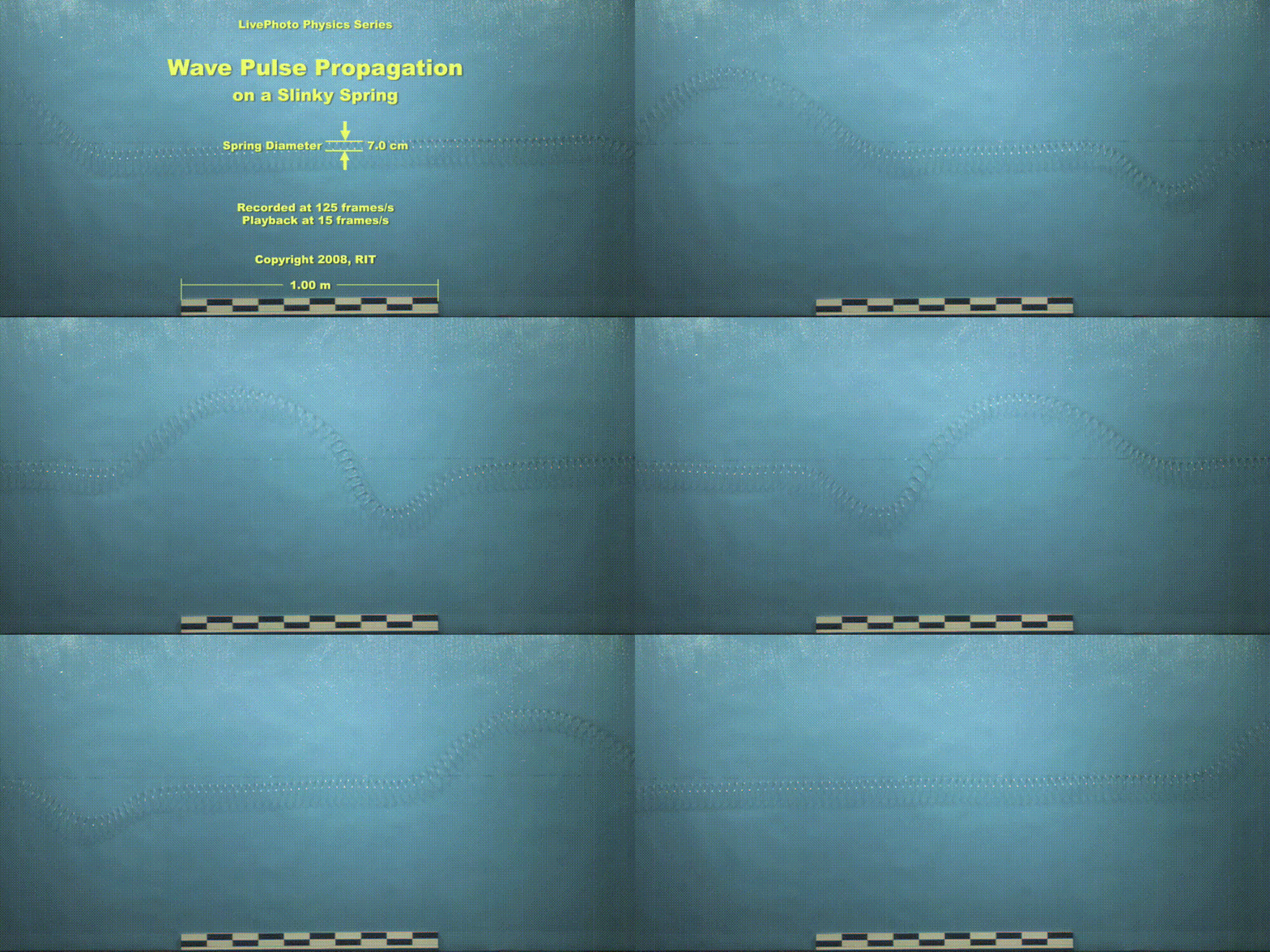
  • Waves on a slinky

In Class Activity:

  • Google Form Group Work
  • Challenge: Don’t knock the cups over!
  • Explain and graphically illustrate the principle of superposition

After Class Work: